

Description
Product Overview
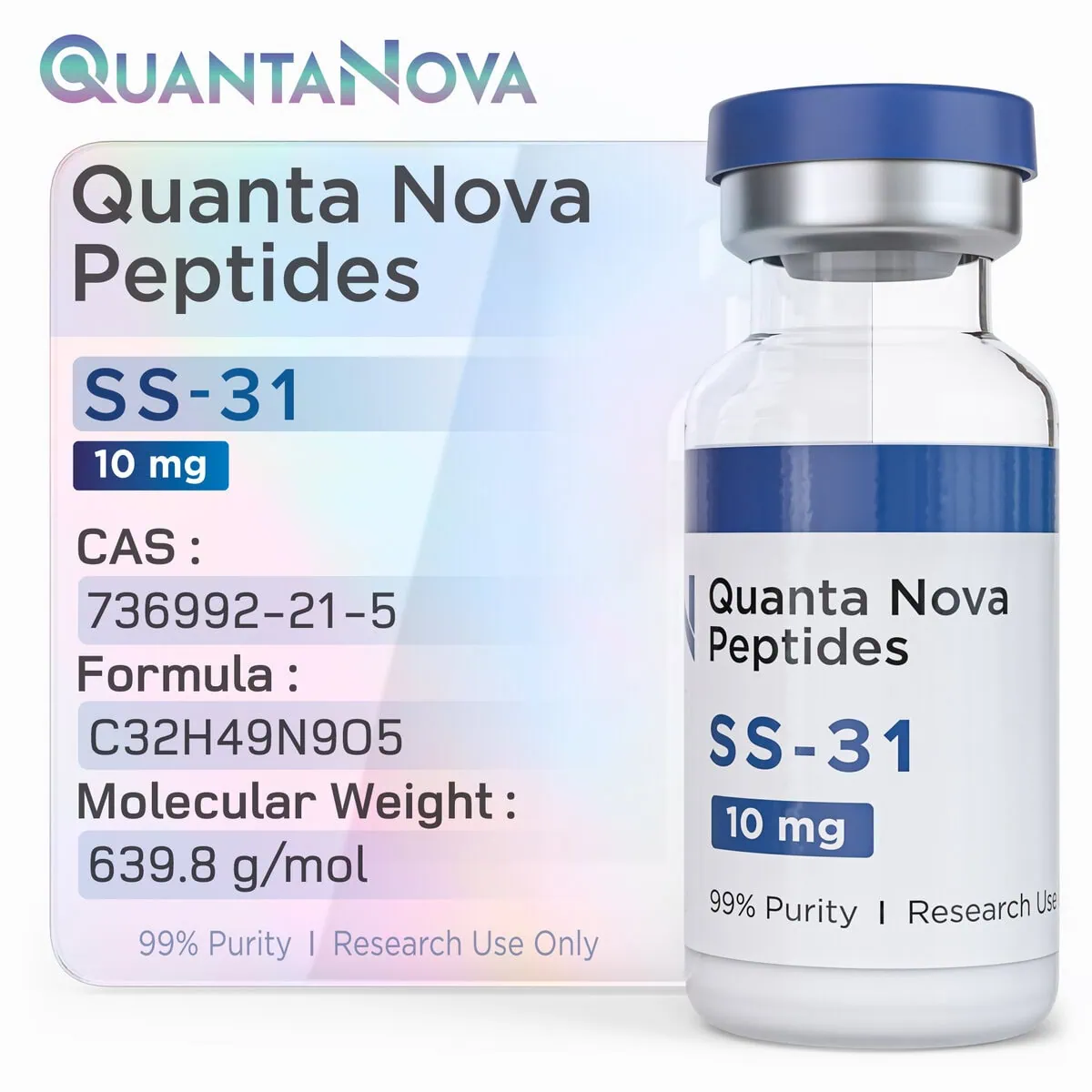
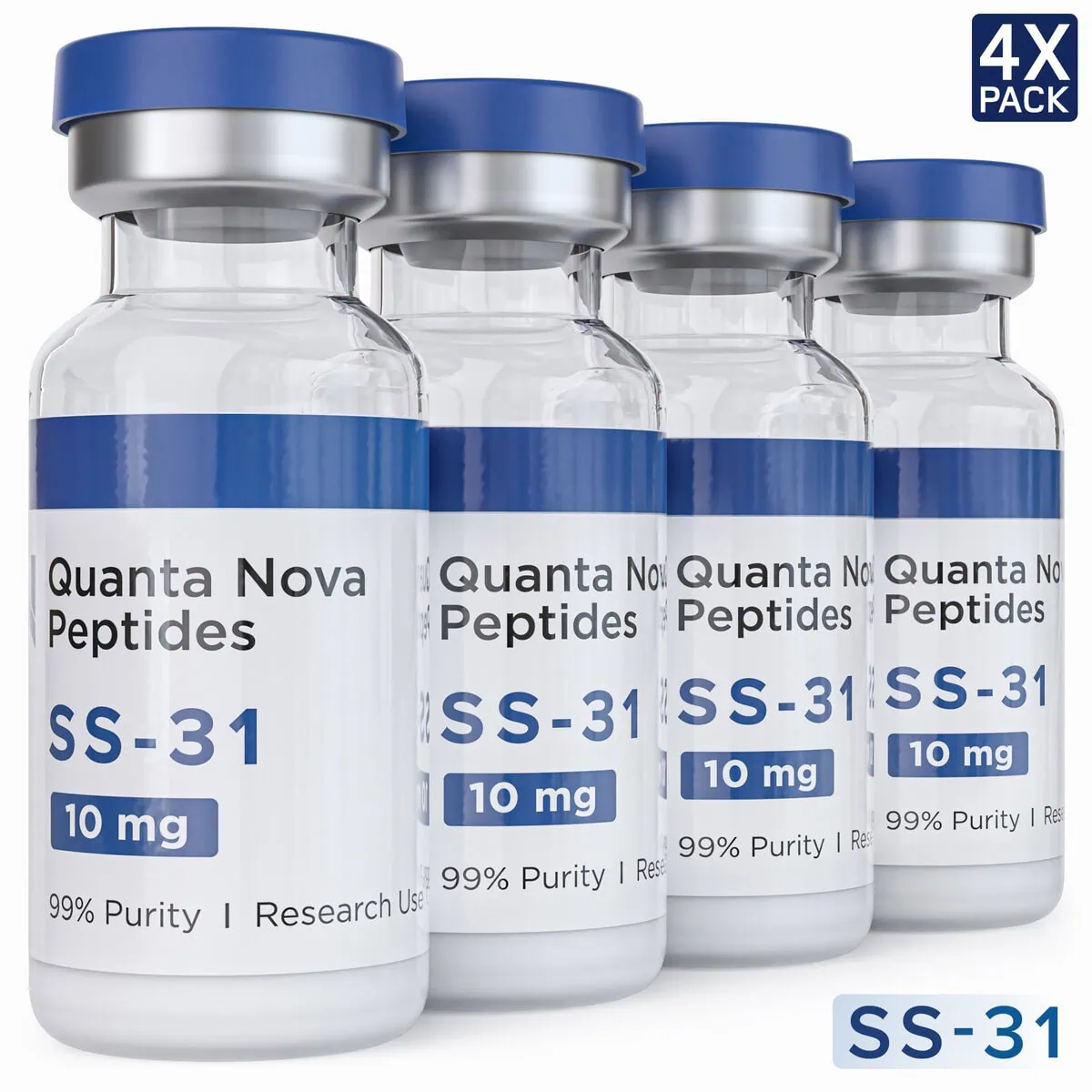
QuantaNova’s SS-31 10mg is available in a 4-vial lyophilized powder bundle, providing 40mg of total peptide for laboratory research applications. Each vial is produced using in-house lyophilization and a proprietary stabilization process designed to protect peptide integrity during temperature fluctuations. This enhanced formulation helps maintain stability during both warm and cold transit conditions for up to 30 days before refrigeration becomes necessary.
We implement strict quality-control standards across every peptide batch and utilize PES micron filtration to reduce potential particulate and microbial contamination. Third-party verification is conducted by Vanguard Laboratory, an ISO-certified facility, to evaluate identity, purity, quantity, and endotoxin levels. QuantaNova is trusted by researchers who value transparency, consistency, and independently verified quality.
SS-31, also known in scientific literature as elamipretide and MTP-131, is an aromatic-cationic tetrapeptide studied primarily for its interaction with cardiolipin within the inner mitochondrial membrane. Research has examined its influence on mitochondrial structure, oxidative phosphorylation, ATP production, and cellular responses to mitochondrial stress.
SS-31 Peptide Structure
Alternative Research Names: Elamipretide, MTP-131
Peptide Sequence: D-Arg-Dmt-Lys-Phe-NH₂
Expanded Sequence: D-Arginyl-2,6-dimethyl-L-tyrosyl-L-lysyl-L-phenylalaninamide
Molecular Formula: C₃₂H₄₉N₉O₅
Molecular Weight: 639.8 g/mol
CAS Number: 736992-21-5
The molecular formula and weight above refer to the neutral parent peptide. Values may differ when the material is supplied as a hydrochloride, acetate, trifluoroacetate, or another salt form, so the final label should be checked against the batch COA.
Key Findings of SS-31
- Studied for its selective interaction with cardiolipin within the inner mitochondrial membrane.
- Investigated for its potential influence on mitochondrial cristae structure and electron-transport efficiency.
- Explored in models involving ATP synthesis, oxidative phosphorylation, and cellular energy production.
- Evaluated in research involving mitochondrial oxidative stress, ischemia-reperfusion, aging, and muscular bioenergetics.
In-Depth Research Applications of SS-31
Cardiolipin Interaction and Mitochondrial Membrane Structure
SS-31 is widely studied for its interaction with cardiolipin, a specialized phospholipid concentrated within the inner mitochondrial membrane. Cardiolipin contributes to mitochondrial cristae formation and helps organize proteins involved in cellular respiration. Experimental research has found that SS-31 associates with cardiolipin through electrostatic and hydrophobic interactions.
Researchers use SS-31 to examine how cardiolipin-associated mechanisms influence mitochondrial membrane organization, cytochrome-c activity, and the structural environment required for efficient energy production. In ischemia models, SS-31 has been associated with preservation of cristae membranes and reduced mitochondrial swelling.
Oxidative Phosphorylation and ATP Production
Mitochondria produce most cellular ATP through oxidative phosphorylation. Disruption of the inner mitochondrial membrane can impair electron transport, reduce ATP synthesis, and alter the cell’s ability to respond to changing energy demands.
SS-31 has been investigated in experimental systems involving mitochondrial respiration, electron-transport-chain coupling, oxygen flux, and ATP recovery. Research using isolated tissues and animal models has reported changes in mitochondrial energetics following exposure to SS-31, making it a useful research compound for examining bioenergetic regulation and mitochondrial efficiency.
Oxidative Stress and Mitochondrial Resilience
Electron leakage from the mitochondrial respiratory chain can contribute to the formation of reactive oxygen species. Excessive mitochondrial oxidative stress may damage proteins, lipids, and mitochondrial DNA while further disrupting energy production.
SS-31 is studied in models involving cardiolipin oxidation, mitochondrial reactive oxygen species, membrane potential, and cellular responses to oxidative damage. Research suggests that its effects may involve stabilization of the local mitochondrial membrane environment rather than conventional free-radical scavenging alone. These properties have made SS-31 a subject of interest in cellular-stress and mitochondrial-resilience research.
Skeletal Muscle and Age-Associated Bioenergetics
Age-associated changes in skeletal muscle frequently involve reduced mitochondrial efficiency, impaired ATP availability, and altered responses to physical energy demand. SS-31 has therefore been evaluated in experimental models examining mitochondrial function and muscular performance during aging.
Studies in aged mice have reported rapid changes in mitochondrial energetics and skeletal-muscle performance after SS-31 exposure. Additional research has investigated its influence on mitochondrial ADP sensitivity and transport through the adenine nucleotide translocator, an inner-membrane protein involved in exchanging ADP and ATP. These findings support continued investigation of SS-31 as a tool for studying age-associated bioenergetic changes.
Cardiac and Ischemia-Reperfusion Research
Tissues with high energy requirements, including cardiac and renal tissue, are particularly dependent on normal mitochondrial function. Temporary interruption and restoration of blood flow can produce rapid changes in mitochondrial structure, ATP availability, calcium handling, and oxidative stress.
SS-31 has been evaluated in ischemia-reperfusion models to investigate mitochondrial recovery, cristae preservation, cardiolipin-associated signaling, and ATP restoration. It has also been examined ex vivo in failing human heart tissue, where researchers measured mitochondrial oxygen flux, respiratory-complex activity, and super complex assembly. These studies remain specific to their experimental models and should not be interpreted as evidence that a research product treats any medical condition.
References
- The Mitochondrial-Targeted Compound SS-31 Re-Energizes Ischemic Mitochondria by Interacting With Cardiolipin.
- Mitochondrial-Targeted Peptide Rapidly Improves Mitochondrial Energetics and Skeletal Muscle Performance in Aged Mice.
- Elamipretide Improves Mitochondrial Function in the Failing Human Heart.
- The Mitochondrially Targeted Peptide Elamipretide Improves ADP Sensitivity in Aged Mitochondria by Increasing Uptake Through the Adenine Nucleotide Translocator.
Usage & Storage Guidelines of SS-31
Handle using appropriate laboratory safety procedures.
Storage—Lyophilized: Store at −20°C, protected from light and moisture.
After Reconstitution: Store between 2–8°C and use within 14–30 days or within the period established by the laboratory’s validated protocol.
Diluent Recommendation: Reconstitute with bacteriostatic water or another sterile, research-grade diluent suitable for the intended laboratory protocol.
Avoid repeated freeze-thaw cycles. Reconstitution volume, concentration, and handling conditions should be determined by the qualified researcher conducting the experiment.
Legal Disclaimer
This QuantaNova product is supplied strictly as a laboratory research material. It is not FDA-approved, is not the FDA-approved Forzinity pharmaceutical product, and is not intended to diagnose, treat, cure, mitigate, or prevent any disease.
This product must not be administered to or used in humans or animals. It is not intended for use as a food, food additive, dietary supplement, cosmetic, household chemical, or therapeutic product. The buyer is responsible for ensuring that the product is purchased, stored, handled, used, and disposed of in accordance with all applicable laws, regulations, and institutional research requirements.




Reviews
There are no reviews yet.