MOTS-c is a mitochondrial-derived peptide studied for its role in cellular energy production, metabolic flexibility, and exercise-related adaptations. Researchers are particularly interested in its ability to influence mitochondrial signaling pathways associated with glucose utilization and metabolic efficiency.
$99.00
Scan to verify this batch

Batch: MOT-1223A
This batch has been tested and documentation is available for review.
Download Result PDFStudied for its potential role in mitochondrial communication and energy regulation
Explored in models involving glucose uptake and metabolic homeostasis
Investigated for exercise-induced adaptations and physical performance pathways
Evaluated in research involving insulin sensitivity and nutrient sensing
| Parameter | Specification | Method |
|---|---|---|
| Appearance | White color powder | Visual Inspection |
Specifications are typical values and do not constitute a warranty of any kind.
MOTS-c is studied in laboratory research involving mitochondrial signaling, cellular energy regulation, glucose utilization pathways, nutrient sensing, and metabolic adaptation models. It is intended strictly for controlled research use and is not intended for human or animal use.
Lyophilized MOTS-c should be stored at -20°C. After reconstitution, it should be stored between 2–8°C and used within the recommended research handling window. Always follow appropriate laboratory safety procedures and storage protocols.
No. QuantaNova MOTS-c is intended strictly for laboratory research purposes only. It is not a drug, food additive, cosmetic, supplement, or therapeutic substance, and must not be used in humans or animals.
1 review · Average 5.0/5
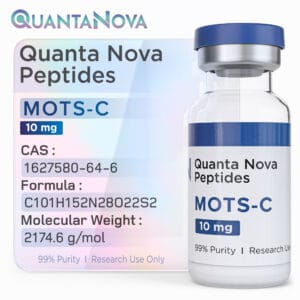
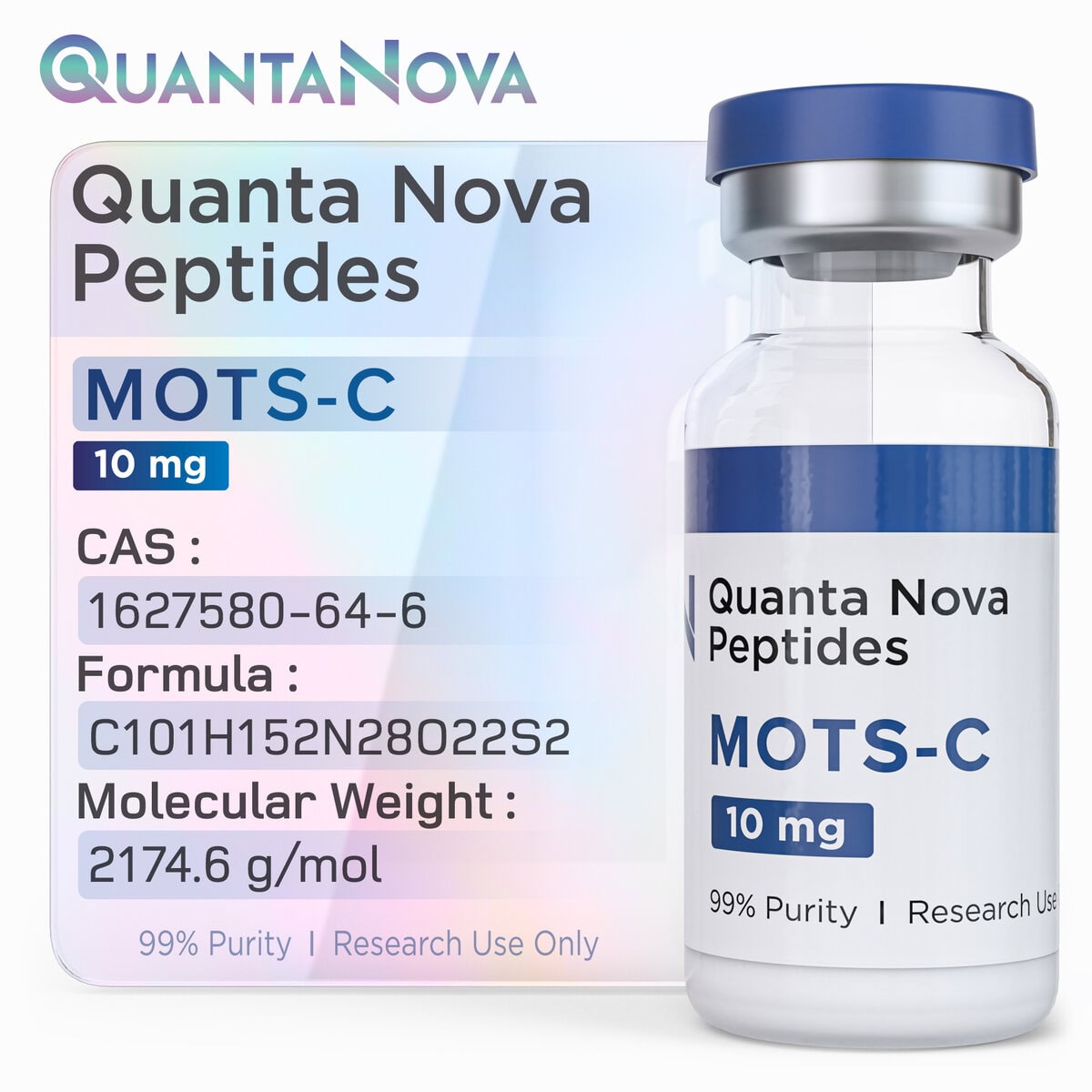
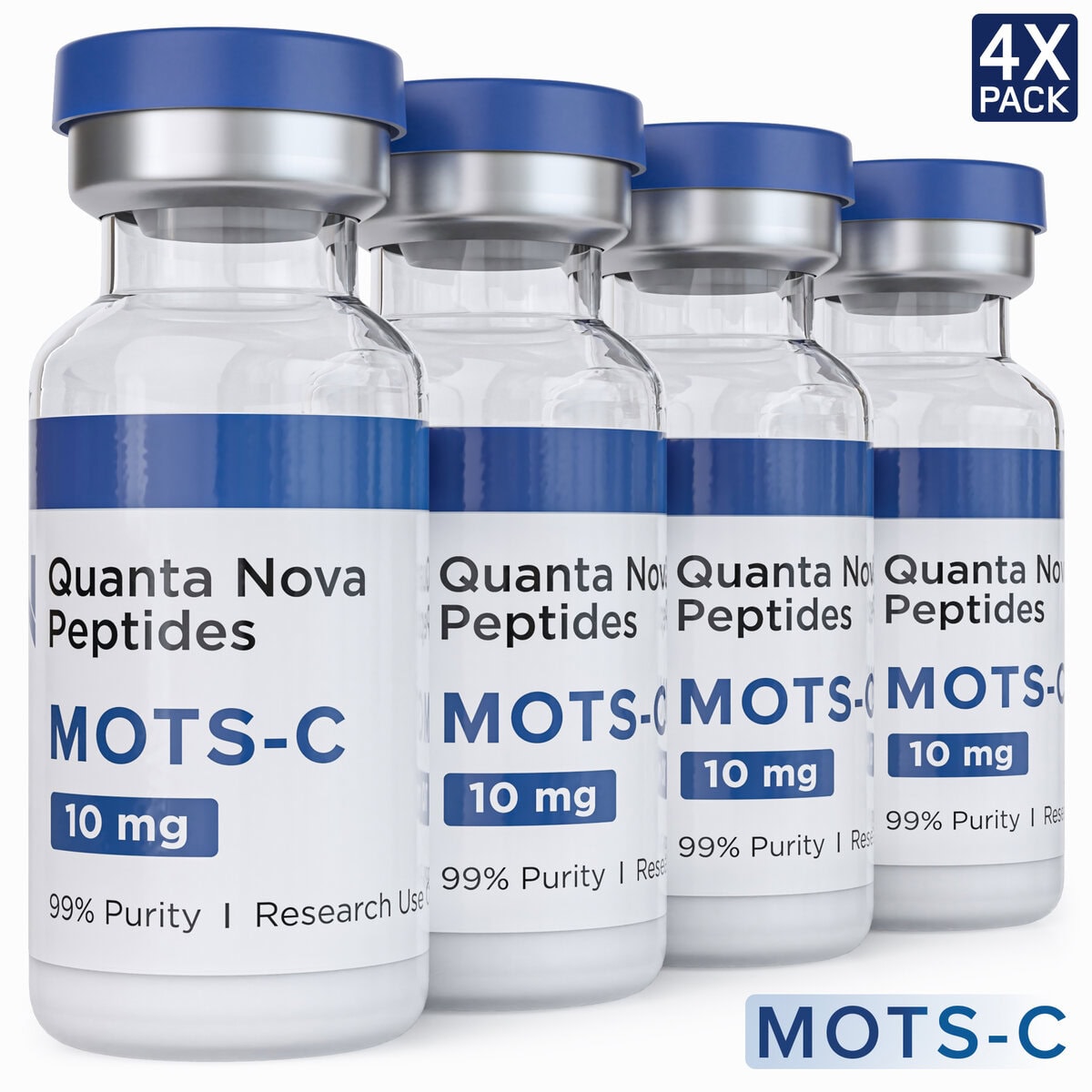
QuantaNova’s MOTS-c 10mg is available in a 4-vial lyophilized powder bundle, formulated for research applications. Each vial is produced using in-house lyophilization and a proprietary stabilization process designed to protect peptide integrity during temperature fluctuations. This enhanced formulation helps maintain stability during both warm and cold transit conditions for up to 30 days before refrigeration becomes necessary.
We implement strict quality control standards across every peptide batch and utilize PES micron filtration to eliminate potential contaminants. Third-party verification is conducted by Vanguard Laboratory, an ISO-certified facility, to ensure that identity, purity, quantity, and endotoxin levels meet rigorous standards. QuantaNova is trusted by researchers who value transparency, consistency, and independently verified quality.
MOTS-c is a mitochondrial-derived peptide encoded within mitochondrial DNA and is recognized for its unique role in cellular communication. Unlike most peptides studied in metabolic research, MOTS-c is produced directly in mitochondria, making it an important target for understanding how cells regulate energy production and adaptation. Researchers frequently investigate MOTS-c in models involving ATP generation, nutrient sensing, and mitochondrial efficiency.
One of the most studied aspects of MOTS-c involves its influence on glucose metabolism. Research has demonstrated that MOTS-c may help regulate pathways associated with glucose uptake and utilization, making it a valuable tool in metabolic research. Scientists continue to explore its effects on insulin signaling, nutrient partitioning, and whole-body metabolic balance in experimental models.
MOTS-c has gained considerable attention in exercise physiology research. Studies suggest the peptide may influence pathways involved in endurance, muscular adaptation, and energy utilization during periods of increased physical demand. Researchers use MOTS-c to investigate how mitochondrial signaling contributes to exercise performance and adaptation to metabolic stress.
As mitochondrial function naturally changes over time, MOTS-c has become a subject of interest in aging-related research. Investigators are exploring its potential role in maintaining metabolic flexibility, cellular resilience, and efficient energy production. These studies focus on understanding how mitochondrial peptides influence long-term cellular health and adaptation.
Research has also examined MOTS-c in models involving environmental and metabolic stress. By influencing pathways involved in cellular adaptation, researchers believe MOTS-c may help cells respond to changing energy demands. This area continues to expand as scientists seek to better understand the connection between mitochondrial communication and metabolic regulation.
References:
This product is intended strictly for laboratory research purposes only. It is not a drug, food additive, cosmetic, or therapeutic substance, and must not be used in humans or animals. It is the buyer’s responsibility to handle the product safely and in accordance with applicable laws and regulations.