

Description
Product Overview
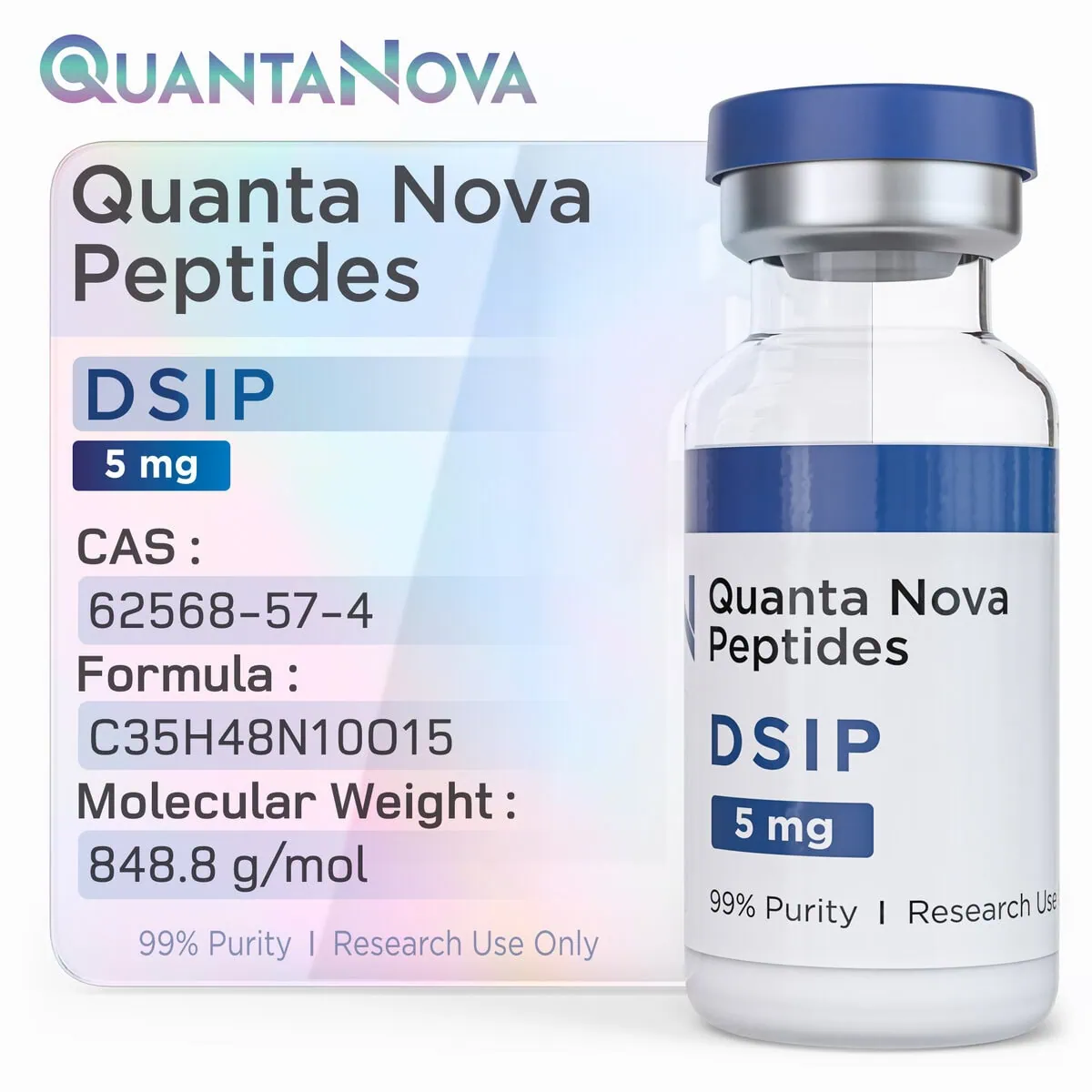
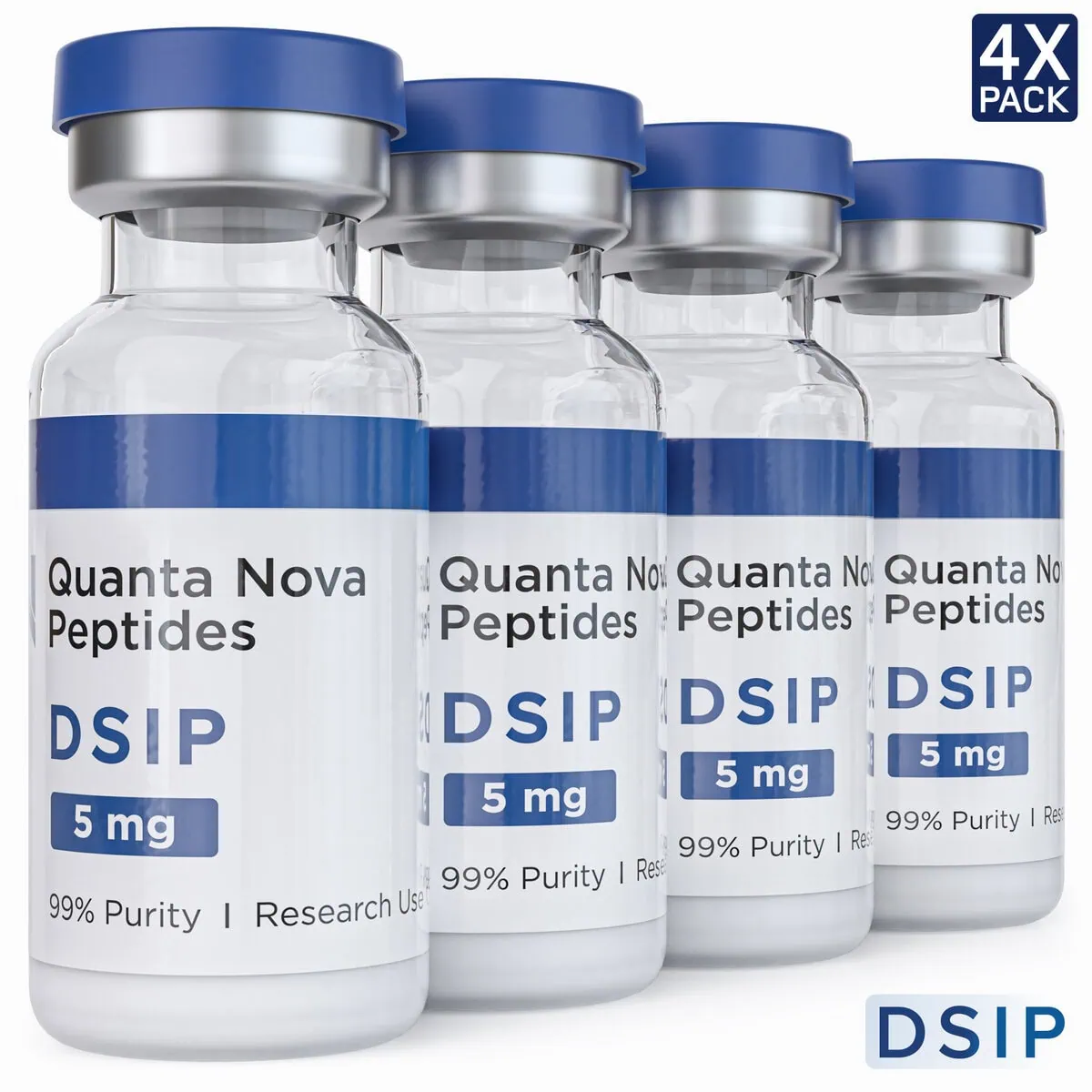
QuantaNova’s DSIP 5mg is available in a 4-vial lyophilized powder bundle, providing 20mg of total peptide for laboratory research applications. Each vial is produced using in-house lyophilization and a proprietary stabilization process designed to protect peptide integrity during temperature fluctuations. This enhanced formulation helps maintain stability during both warm and cold transit conditions for up to 30 days before refrigeration becomes necessary.
We implement strict quality-control standards across every peptide batch and utilize PES micron filtration to reduce potential particulate and microbial contamination. Third-party verification is conducted by Vanguard Laboratory, an ISO-certified facility, to evaluate identity, purity, quantity, and endotoxin levels. QuantaNova is trusted by researchers who value transparency, consistency, and independently verified quality.
DSIP, also known as delta sleep-inducing peptide or emideltide, is a nine-amino-acid peptide that has been historically studied in sleep architecture, electroencephalographic activity, circadian signaling, and neuroendocrine stress-response models. Experimental outcomes have varied across species and research protocols, and the precise biological mechanism remains unresolved.
DSIP Peptide Structure
Alternative Research Name: Emideltide
Peptide Sequence: Trp-Ala-Gly-Gly-Asp-Ala-Ser-Gly-Glu
Molecular Formula: C₃₅H₄₈N₁₀O₁₅
Molecular Weight: 848.8 g/mol
CAS Number: 62568-57-4
UNII: YN28Z5YZ73
These molecular values refer to the neutral parent peptide. Molecular weight and formula may differ when DSIP is supplied as an acetate, trifluoroacetate, or another salt form, so final product information should be confirmed against the batch certificate of analysis.
Key Findings of DSIP
- Studied for its potential influence on sleep architecture and sleep-associated EEG activity
- Explored in experimental models involving circadian rhythms and sleep-wake regulation
- Investigated for interactions with neuroendocrine stress-response pathways
- Evaluated in animal models involving oxidative balance and cellular responses to stress
- Research outcomes have varied depending on species, experimental conditions, and administration protocols
In-Depth Research Applications of DSIP
Sleep Architecture and EEG Activity
DSIP was originally investigated because of its reported association with delta-wave and slow-wave sleep. Researchers have examined the peptide using electroencephalography, polysomnography, and behavioral sleep measurements to determine whether it influences sleep initiation, sleep duration, or the distribution of different sleep stages.
Some animal experiments reported increases in total sleep time or changes in slow-wave activity following DSIP exposure. A small double-blind study involving individuals with chronic insomnia also evaluated changes in sleep structure and daytime performance. However, other experimental studies reported neutral or opposing findings, including reduced sleep in certain animal models. These differences indicate that DSIP does not produce a uniform sleep response across all species or experimental conditions.
Circadian Rhythm and Sleep-Wake Signaling
Researchers have explored DSIP in models examining circadian motor activity, time-dependent physiological signaling, and the regulation of sleep-wake patterns. Experimental work in rats found that repeated DSIP exposure altered circadian locomotor activity under constant-light conditions, suggesting a potential interaction with biological timing systems.
Other research examined the effects of DSIP and related analogs on N-acetyltransferase, an enzyme involved in the biochemical pathway of melatonin production. The observed effects depended on the time of administration, supporting continued investigation into how DSIP may interact with circadian signaling rather than functioning solely as a direct sleep-inducing factor.
Neuroendocrine Stress-Response Research
DSIP has been studied in experimental models of the hypothalamic-pituitary-adrenal axis and other pathways involved in physiological stress adaptation. In isolated rat pituitary tissue, DSIP inhibited corticotropin-releasing-factor-stimulated ACTH release and reduced associated cyclic AMP activity without significantly changing basal ACTH levels.
Animal studies have also evaluated DSIP during acute emotional, environmental, and physical stress. These investigations focus on whether the peptide influences neuroendocrine communication and physiological responses under conditions that disrupt normal homeostasis. The findings remain preclinical and should not be interpreted as evidence of a therapeutic effect in humans.
Oxidative Balance and Cellular Stress Models
DSIP has been examined in animal models involving oxidative stress and endogenous antioxidant systems. In cold-stress experiments, researchers measured changes in xanthine oxidase, myeloperoxidase, and several antioxidant enzymes following DSIP exposure.
Reported findings included changes in prooxidant-antioxidant balance and antioxidant-enzyme activity. These studies have sparked interest in DSIP as a research tool for investigating the relationships among stress signaling, free-radical processes, and cellular adaptation. Further research is required to establish the underlying pathways and determine whether these effects are reproducible across different models.
Nociceptive and Neurotransmission Research
Researchers have also evaluated DSIP in experimental models involving nociceptive signaling and neuronal excitability. Early animal studies reported changes in behavioral responses to painful stimuli, while other work examined DSIP in NMDA-induced excitatory-response models.
These findings suggest that DSIP may interact with broader neuromodulatory pathways beyond sleep regulation. However, the available evidence is predominantly preclinical, and the peptide’s receptor targets and primary mechanism of action have not been conclusively established.
References
- PubChem Compound Summary: Delta Sleep-Inducing Peptide.
- Effects of Delta Sleep-Inducing Peptide on Sleep of Chronic Insomniac Patients.
- The Effect of Delta Sleep-Inducing Peptide on EEG Activity in Rats.
- The Delta Sleep-Inducing Peptide Increases Duration of Sleep in Rats.
- Delta Sleep-Inducing Peptide: A Still-Unresolved Riddle.
- DSIP Inhibition of CRF-Induced ACTH Release in Rat Pituitary Tissue.
- Regulation of Free-Radical Processes by Delta Sleep-Inducing Peptide.
Usage & Storage Guidelines of DSIP
Could you handle using appropriate laboratory safety procedures? Could you handle using appropriate laboratory safety procedures?
Storage—Lyophilized: Store at −20°C, protected from light and moisture.
After reconstitution, store at 2–8°C and use within 14–30 days, or within the timeframe specified by the laboratory’s validated protocol.
Diluent Recommendation: Reconstitute with bacteriostatic water or another suitable sterile, research-grade diluent.
Avoid repeated freeze-thaw cycles. Reconstitution volume, final concentration, and handling conditions should be established by the qualified researcher experimenting.
Legal Disclaimer
This product is intended strictly for laboratory research purposes only. It is not FDA-approved and must not be used as a drug, food additive, dietary supplement, cosmetic, or therapeutic substance. It must not be administered to or used in humans or animals.
It is the buyer’s responsibility to purchase, store, handle, use, and dispose of this product safely and in accordance with all applicable laws, regulations, and institutional research requirements.
Reviews
There are no reviews yet.