

Description
Product Overview
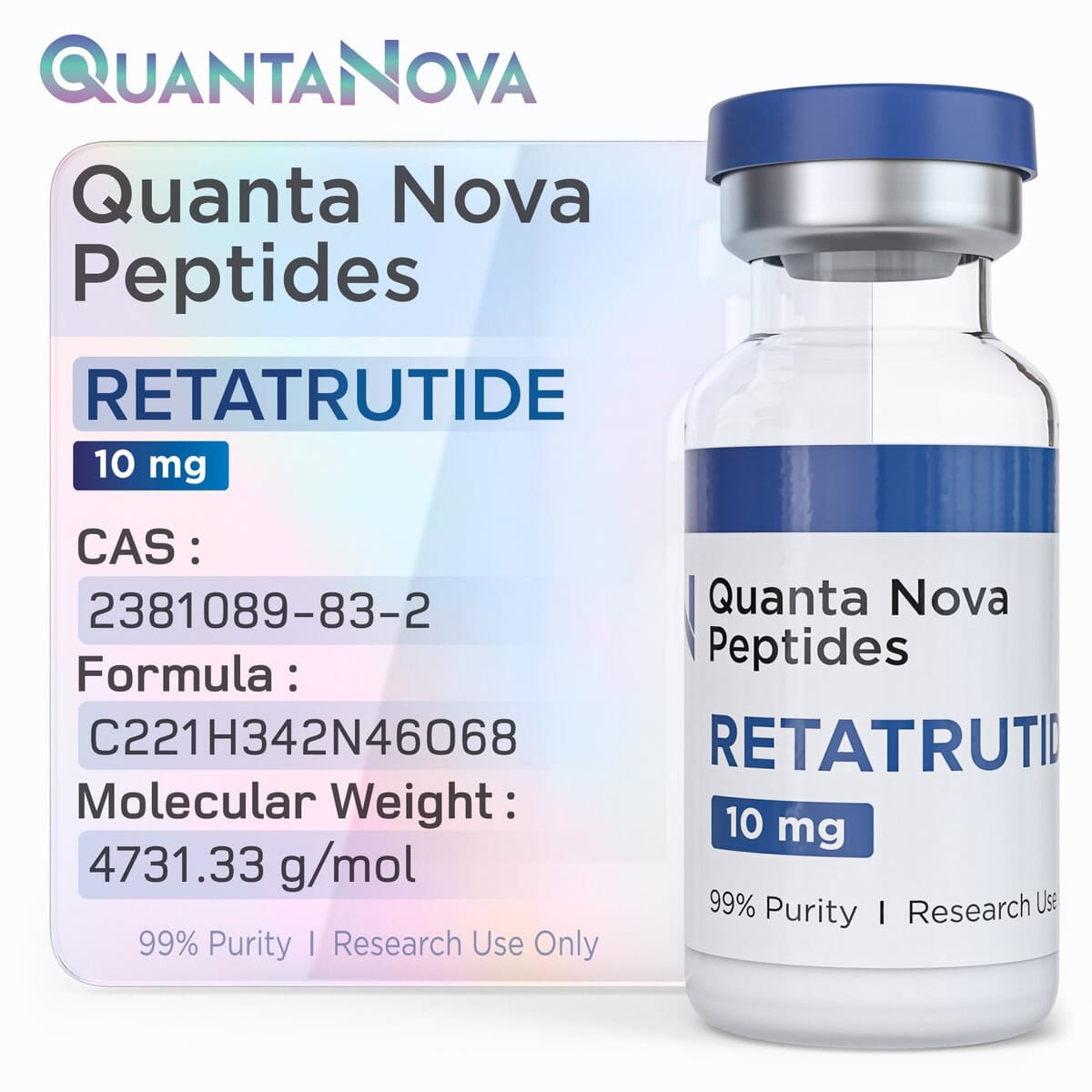
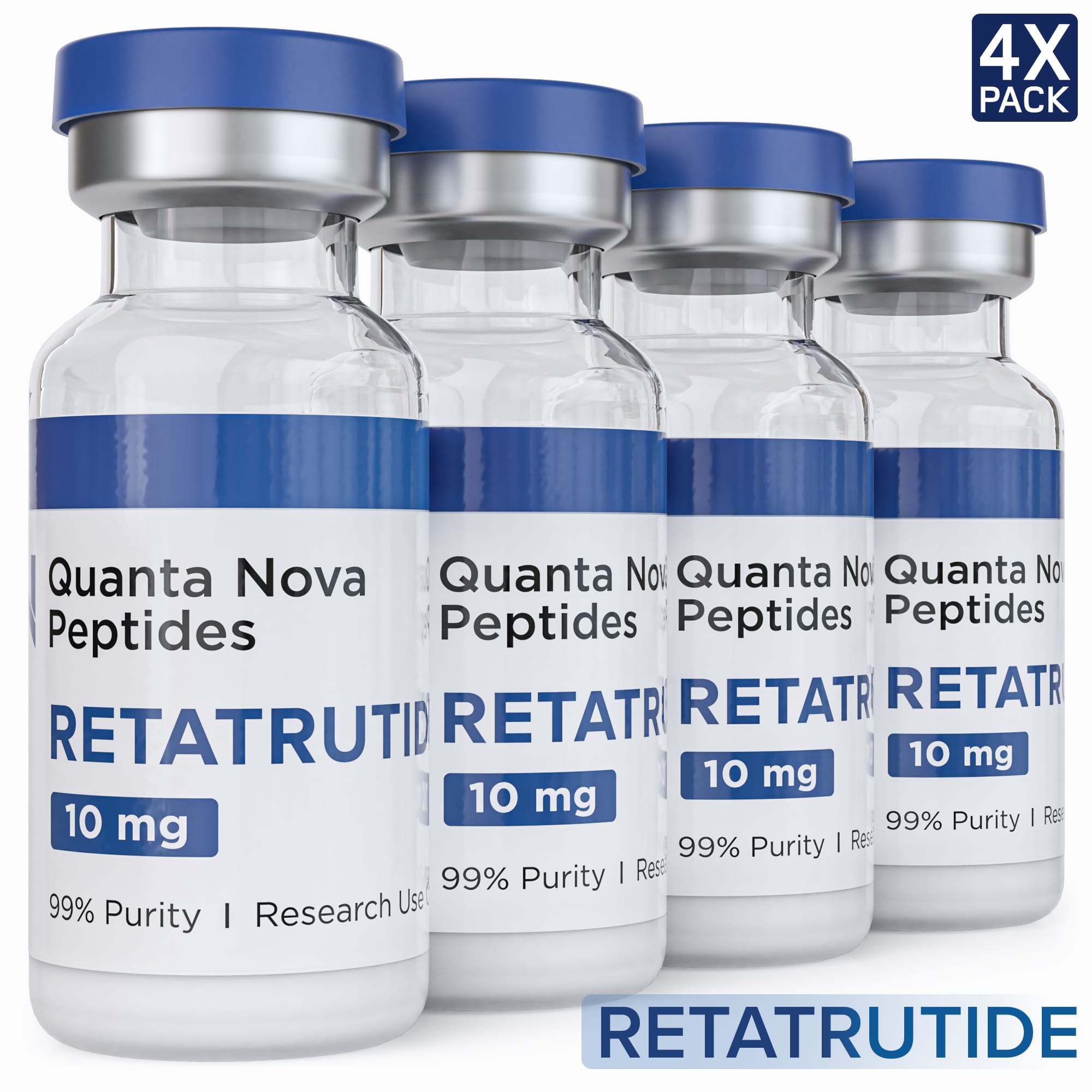
QuantaNova’s Retatrutide 10mg is offered in a 4-vial bundle of lyophilized powder, formulated for research applications. Each vial is produced in-house through lyophilization, using a proprietary stabilization process to maintain the integrity of the peptide during temperature fluctuations. This includes protection against heat and cold throughout the shipping process for up to 30 days before refrigeration becomes necessary.
We implement strict quality control standards across every peptide batch and utilize PES micron filtration to eliminate potential contaminants. Third-party verification is conducted by Vanguard Laboratory, an ISO-certified facility, to ensure that identity, purity, quantity, and endotoxin levels meet rigorous benchmarks. QuantaNova is trusted by researchers for transparency and consistency.
Retatrutide Peptide Structure
- Amino Acid Sequence: Tyr-{Aib}-Gln-Gly-Thr-Phe-Thr-Ser-Asp-Tyr-Ser-Ile-{α-Me-Leu}-Leu-Asp-Lys-{diacid-C20-gamma-Glu-(AEEA)-Lys}-Ala-Gln-{Aib}-Ala-Phe-Ile-Glu-Tyr-Leu-Leu-Glu-Gly-Gly-Pro-Ser-Ser-Gly-Ala-Pro-Pro-Pro-Ser-NH2 (Sodium salt)
- Molecular Formula: C221H342N46O68
- Molecular Weight: Approximately 4731.33 g/mol
- CAS Number: 2381089-83-2
Key Findings of Retatrutide
- Studied for its potential to activate GLP-1, GIP, and glucagon receptors simultaneously
- Explored in models involving energy expenditure and metabolic regulation
- Examined for effects on body weight and adipose tissue metabolism
- Investigated for glucose utilization and insulin signaling pathways
- Evaluated in research related to appetite regulation and satiety signaling
In-Depth Research Applications of Retatrutide
Triple Receptor Agonist Research
Retatrutide is a next-generation investigational peptide that has attracted significant interest due to its unique ability to activate three separate receptor systems: glucagon-like peptide-1 (GLP-1), glucose-dependent insulinotropic polypeptide (GIP), and glucagon receptors. This triple-agonist mechanism distinguishes Retatrutide from earlier incretin-based peptides and provides researchers with a valuable model for studying complex metabolic pathways.
Metabolic Regulation and Energy Expenditure
One of the most studied areas of Retatrutide research involves energy balance and metabolic efficiency. Laboratory studies have explored how activation of multiple metabolic receptors may influence nutrient utilization, energy expenditure, and lipid metabolism. Researchers are particularly interested in understanding how these pathways interact to regulate body composition and overall metabolic function.
Appetite and Satiety Signaling
Retatrutide is frequently evaluated in models involving appetite regulation and feeding behavior. Research suggests the peptide may influence central and peripheral signaling pathways involved in satiety. These studies help investigators better understand how hormonal communication between the gastrointestinal system and central nervous system affects food intake and energy homeostasis.
Glucose and Insulin Pathway Research
In addition to appetite-related studies, Retatrutide has been extensively evaluated for its effects on glucose metabolism. Research models have examined its influence on insulin secretion, glucose utilization, and overall glycemic regulation. These investigations continue to provide insight into the complex relationship between incretin hormones and metabolic control.
Neurological and Central Signaling Interest
Emerging research has highlighted the potential importance of GLP-1 and GIP receptor activity within the central nervous system. Scientists are studying how Retatrutide may affect neuroendocrine communication, reward pathways, and central appetite regulation. While these investigations remain ongoing, they represent an expanding area of interest in metabolic and neurological research.
References
- Triple Receptor Agonist Research
- Metabolic Regulation and Energy Expenditure
- Appetite and Satiety Signaling
- Glucose and Insulin Pathway Research
- Neurological and Central Signaling Interest
Usage & Storage Guidelines of Retatrutide
- Handle using appropriate laboratory safety procedures.
- Storage (Lyophilized): Store at -20°C.
- After Reconstitution: Store between 2–8°C and use within 14–30 days.
- Diluent Recommendation: Reconstitute with bacteriostatic water or a suitable research-grade diluent.
Legal Disclaimer
This product is intended strictly for laboratory research purposes only. It is not a drug, food additive, cosmetic, or therapeutic substance, and must not be used in humans or animals. It is the buyer’s responsibility to handle the product safely and in accordance with applicable laws and regulations.


Reviews
There are no reviews yet.