Research solvent checklist
Does BAC water dissolve your peptide clearly, and what does the research say about peptide integrity? Review the evidence and reported observations for each peptide below.
By Isaiah D.
Chief Technology Officer and Head of Formulations, Quantum Innovation Labs LLC
Prepared for Quanta Nova LLC · Research reviewed October 20, 2026
Jump to a peptide 18 assessments
How to read this checklist
This BAC water for peptides checklist combines published research, supplier technical information and Quanta Nova’s reported dissolution observations. Each assessment separates the research on peptide integrity from the product’s visible appearance after mixing.
Product observations
Clear, cloudy and gelling findings describe Quanta Nova’s own peptide products. They are manufacturer-reported observations, rather than batch-specific analytical stability results. Other manufacturers’ peptides and formulations may behave differently.
Research reviewed
Numbered references identify the sources used for each assessment. Supplier solubility data, formulation studies and non-peer-reviewed reports are identified in context. These sources answer different questions and should be interpreted within their stated conditions.
A starting point for research
These findings and our interpretation are not absolute conclusions or guarantees. Concentration, pH, formulation, temperature and time can change the outcome. A clear solution does not prove preserved peptide integrity; cloudiness or gelling alone does not establish chemical degradation. Each researcher should conduct and document studies appropriate to the material and intended experiment.
Laboratory research only. This information is provided solely for laboratory research. The products described are not intended for human consumption or administration.
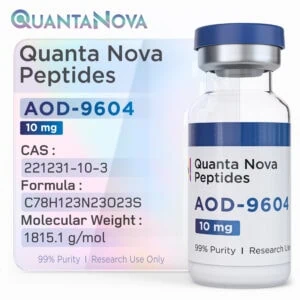
AOD-9604
10 mg × 4 vials · Lyophilized research material
Degradation evidence
No BAC-specific chemical degradation study identified. FDA discusses formulation-related aggregation and degradation concerns; the reported gelling does not establish whether integrity is preserved.
Clear dissolution in BAC water
No — cloudiness and gelling reported with BAC water alone.
Alternative findings
BAC water : 0.6% acetic acid solution — 50:50: Reported clear-solution recommendation.
BAC water : 0.6% acetic acid solution — 75:25: Reported alternative clear-solution recommendation.
Ratios refer to BAC water and the prepared 0.6% acetic acid solution. These appearance recommendations do not establish peptide integrity or a storage interval.
Research notes & sources
Published guidance describes water reconstitution for an AOD-9604 reference material. The cloudiness and gelling finding above describes the Quanta Nova product.
The alternative blends are reported appearance recommendations. Clear appearance alone does not establish analytical integrity or a storage interval.
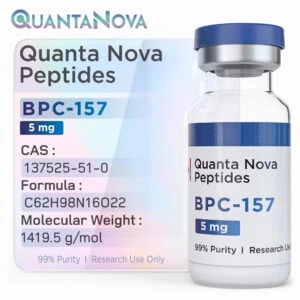
BPC-157
5 mg × 4 vials · Lyophilized research material
Degradation evidence
No evidence of BAC-water-related peptide degradation was identified in the research reviewed.
Clear dissolution in BAC water
Yes — clear, without observed cloudiness or gelling.
Research notes & sources
Third-party supplier data document water solubility for BPC-157. Quanta Nova reports clear dissolution in BAC water.
The cited solubility result does not establish a refrigerated shelf life or retained biological activity after mixing.
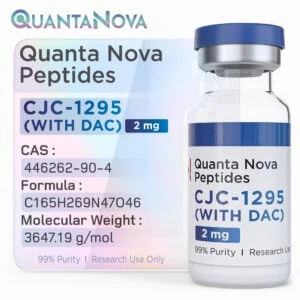
CJC-1295 with DAC
2 mg × 4 vials · Lyophilized research material
Degradation evidence
No evidence of BAC-water-related peptide degradation was identified in the research reviewed.
Clear dissolution in BAC water
Yes — clear, without observed cloudiness or gelling.
Research notes & sources
CJC-1295 with DAC and CJC-1295 without DAC are distinct materials. Their solvent findings need to be matched to the correct form.
The acetic-acid solubility information for the no-DAC free base does not establish solubility for the DAC product.
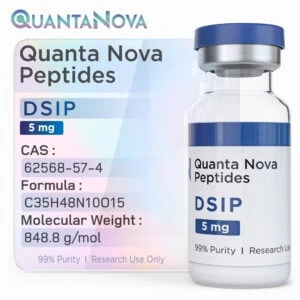
DSIP
5 mg × 4 vials · Lyophilized research material
Degradation evidence
No evidence of BAC-water-related peptide degradation was identified in the research reviewed.
Clear dissolution in BAC water
Yes — clear, without observed cloudiness or gelling.
Research notes & sources
DSIP is also called emideltide. The cited acetate reference material has documented solubility in an aqueous buffer.
The supplier’s solution-storage guidance applies to its own material; a multiweek storage interval has not been established here for the Quanta Nova formulation.
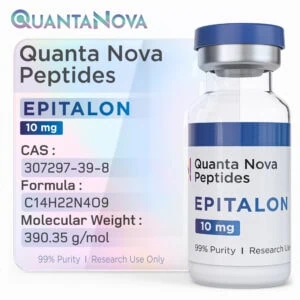
Epithalon
10 mg × 4 vials · Lyophilized research material
Degradation evidence
No evidence of BAC-water-related peptide degradation was identified in the research reviewed.
Clear dissolution in BAC water
Yes — clear, without observed cloudiness or gelling.
Research notes & sources
Epithalon is also called Epitalon. Supplier information and the FDA assessment of its free base report differing solubility findings.
The reviewed evidence does not establish 0.6% acetic acid or PBS as a better option for this formulation.
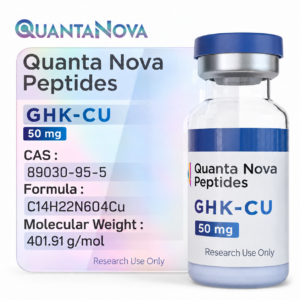
GHK-Cu
50 mg × 4 vials · Lyophilized research material
Degradation evidence
No evidence of BAC-water-related peptide degradation was identified in the research reviewed.
Clear dissolution in BAC water
Yes — clear, without observed cloudiness or gelling.
Research notes & sources
The cited material is the copper complex GHK-Cu, rather than copper-free GHK. Third-party supplier data document water solubility for GHK-Cu. Quanta Nova reports clear dissolution in BAC water.
The reviewed sources do not establish an acid or phosphate buffer as a preferable option for this formulation.
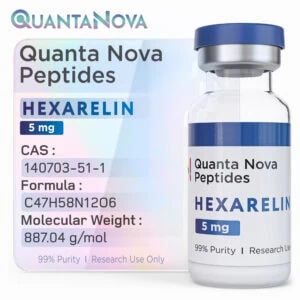
Hexarelin
5 mg × 4 vials · Lyophilized research material
Degradation evidence
No evidence of BAC-water-related peptide degradation was identified in the research reviewed.
Clear dissolution in BAC water
Yes — clear, without observed cloudiness or gelling.
Research notes & sources
The cited Hexarelin acetate reference material has documented solubility in an aqueous buffer.
That solubility result does not establish a 14–30-day post-mixing storage interval for this formulation.
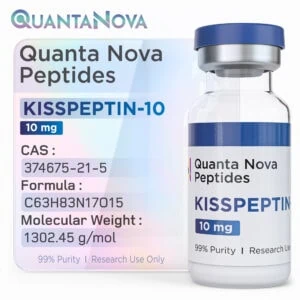
Kisspeptin-10
10 mg × 4 vials · Lyophilized research material
Degradation evidence
No evidence of BAC-water-related peptide degradation was identified in the research reviewed.
Clear dissolution in BAC water
Yes — clear, without observed cloudiness or gelling.
Research notes & sources
The cited human kisspeptin-10 batch has documented water solubility at the supplier’s stated concentration.
The sequence, counterion and concentration define the conditions of that finding.
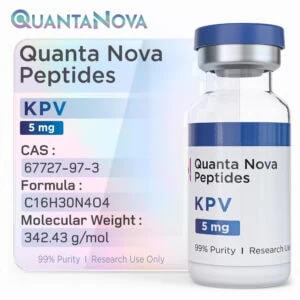
KPV
5 mg × 4 vials · Lyophilized research material
Degradation evidence
No evidence of BAC-water-related peptide degradation was identified in the research reviewed.
Clear dissolution in BAC water
Yes — clear, without observed cloudiness or gelling.
Research notes & sources
The cited KPV-OH reference material is identified by its terminal form and counterion.
Its findings apply to that material and do not establish the behavior of amidated KPV or a different formulation.
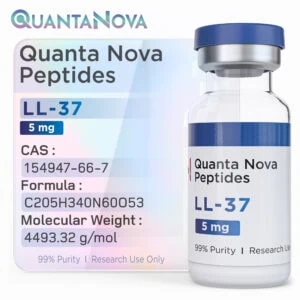
LL-37
5 mg × 4 vials · Lyophilized research material
Degradation evidence
No evidence of BAC-water-related peptide degradation was identified in the research reviewed.
Clear dissolution in BAC water
Yes — clear, without observed cloudiness or gelling.
Research notes & sources
The cited sources document water-solubility guidance for LL-37. In antimicrobial experiments, a preservative can also influence the assay itself.
An assay effect is distinct from chemical degradation of the peptide.
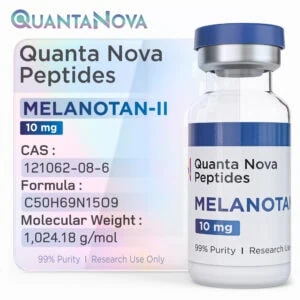
Melanotan II
10 mg × 4 vials · Lyophilized research material
Degradation evidence
No evidence of BAC-water-related peptide degradation was identified in the research reviewed.
Clear dissolution in BAC water
Yes — clear, without observed cloudiness or gelling.
Research notes & sources
The cited Melanotan II reference batch has documented water solubility at the supplier’s stated concentration.
That result describes dissolution under the reported conditions; it does not establish solution stability over time.
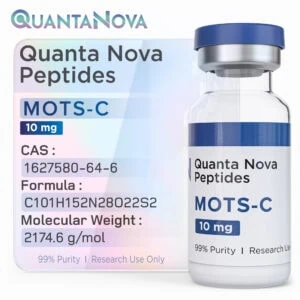
MOTS-c
10 mg × 4 vials · Lyophilized research material
Degradation evidence
A non-peer-reviewed report describes declining UV measurements during storage in BAC water. It does not establish BAC as the cause or directly measure retained biological activity.
Clear dissolution in BAC water
Yes — clear, without observed cloudiness or gelling.
Research notes & sources
The solubility reference concerns human MOTS-c. Human and mouse MOTS-c have different sequences.
The non-peer-reviewed storage report used one diluent and UV-Vis measurements. It did not report a preservative-free comparison or validated functional activity measurements, and it does not establish a storage interval for this formulation.
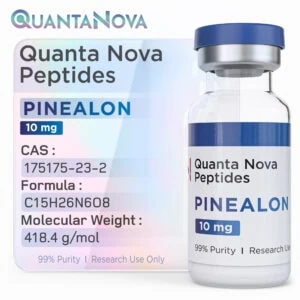
Pinealon
10 mg × 4 vials · Lyophilized research material
Degradation evidence
No evidence of BAC-water-related peptide degradation was identified in the research reviewed.
Clear dissolution in BAC water
Yes — clear, without observed cloudiness or gelling.
Research notes & sources
The cited Pinealon acetate certificate records water dissolution during analytical sample preparation.
This documents an analytical workflow, rather than a finished-solution stability study. Counterion, concentration and holding conditions remain relevant to interpreting it.
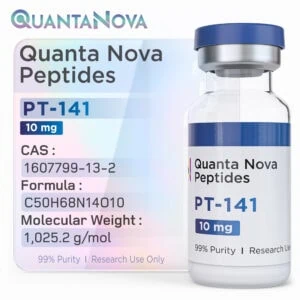
PT-141
10 mg × 4 vials · Lyophilized research material
Degradation evidence
No evidence of BAC-water-related peptide degradation was identified in the research reviewed.
Clear dissolution in BAC water
Yes — clear, without observed cloudiness or gelling.
Research notes & sources
PT-141 is also known as bremelanotide. The cited bremelanotide acetate review documents aqueous solubility.
The reviewed pharmaceutical formulation does not supply mixing or storage instructions for this research product.
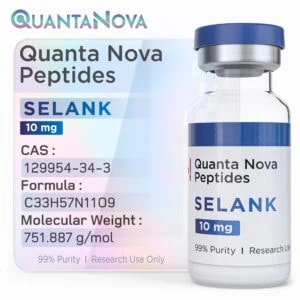
Selank
10 mg × 4 vials · Lyophilized research material
Degradation evidence
No evidence of BAC-water-related peptide degradation was identified in the research reviewed.
Clear dissolution in BAC water
Yes — clear, without observed cloudiness or gelling.
Research notes & sources
The cited Selank acetate reference material has documented solubility in an aqueous phosphate buffer.
The counterion, buffer conditions and supplier’s solution-storage guidance belong to that reference material. A multiweek storage interval is not established here.
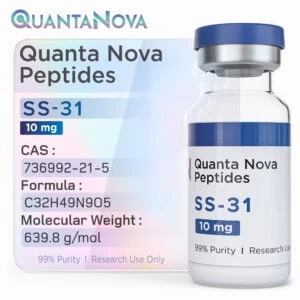
SS-31
10 mg × 4 vials · Lyophilized research material
Degradation evidence
No evidence of BAC-water-related peptide degradation was identified in the research reviewed.
Clear dissolution in BAC water
Yes — clear, without observed cloudiness or gelling.
Research notes & sources
SS-31 is also called elamipretide or MTP-131. The cited acetate reference material has documented solubility in an aqueous buffer.
The supplier’s short aqueous-storage guidance does not establish a universal shelf life after mixing.
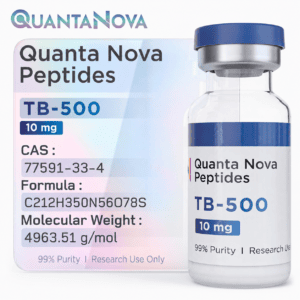
TB-500
10 mg × 4 vials · Lyophilized research material
Degradation evidence
Assessment pending identity confirmation. Degradation findings cannot be transferred between different thymosin-β4-related sequences.
Clear dissolution in BAC water
Yes — clear, without observed cloudiness or gelling.
Research notes & sources
TB-500 is used for different thymosin-β4-related materials. The cited supplier sheet describes a specific fragment.
The complete sequence and current batch identity need confirmation before a solvent recommendation can be made. The reported clear appearance is recorded separately.
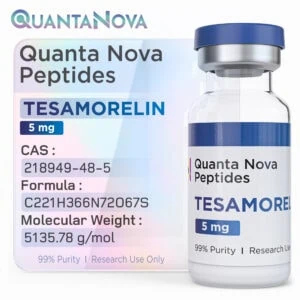
Tesamorelin
5 mg × 4 vials · Lyophilized research material
Degradation evidence
Manufacturer formulation studies report degradation under accelerated conditions in solutions including benzyl alcohol. These findings do not isolate BAC as the cause; compatibility depends on the finished formulation and conditions.
Clear dissolution in BAC water
Yes — clear, without observed cloudiness or gelling.
Research notes & sources
Different labeled tesamorelin formulations specify different supplied diluents. The patent also examines formulation-dependent stability.
These findings describe the formulations and conditions studied; they do not establish stability or a storage interval for the Quanta Nova research formulation.
For protocols that support BAC water
Explore Quanta Nova BAC water
Compare pack sizes and review current batch documentation in the BAC water hub. Select a diluent only after confirming that it fits your material and research protocol.
Shop BAC Water